 (1).webp)
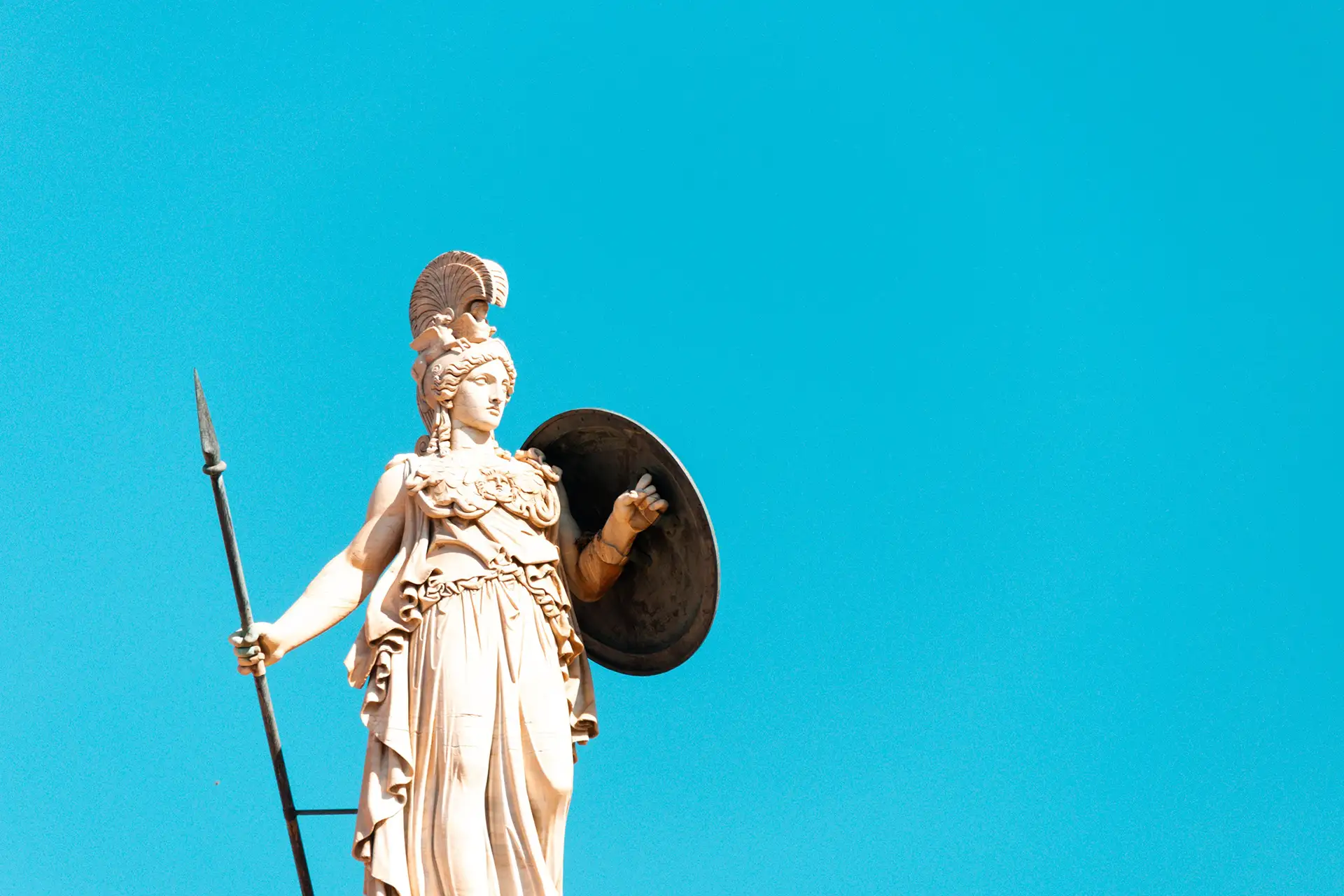
Athena: Goddess of Wisdom and War Strategy
Athena: Goddess of Wisdom and War Strategy
Athena is one of the most important and recognizable figures in Greek mythology. Known as the goddess of wisdom, strategic warfare, crafts, and reason, she represented a very different form of power from the brute strength often associated with war.
Athena was admired for her intelligence, courage, discipline, and ability to make wise decisions. She was also closely connected with the city of Athens, which was named in her honor. Her influence can be seen throughout Greek mythology, ancient art, literature, and religious traditions.
Who Was Athena?
Athena was one of the twelve Olympian gods and goddesses. According to Greek mythology, she was the daughter of Zeus. Her birth was extraordinary because she emerged fully grown and armed from Zeus's head after he experienced a severe headache.
This unusual origin story reflects Athena's close association with intelligence, thought, and wisdom. Rather than being born in an ordinary way, she appeared directly from the mind of the most powerful Olympian god.
Athena became one of Zeus's most trusted divine allies and played an important role in many mythological stories.
Athena as the Goddess of Wisdom
Wisdom was one of Athena's most important attributes. She represented intelligent decision-making, practical knowledge, reason, and strategic thinking.
Unlike wisdom that is purely theoretical, Athena's wisdom was often connected with action. She was admired for knowing when to fight, when to negotiate, and how to overcome difficult challenges through intelligence.
This made her especially important in stories involving heroes who needed guidance rather than simply physical strength.
Athena and War Strategy
Athena was also associated with warfare, but her approach was different from that of Ares, another Greek god connected with war.
Ares represented the violent and chaotic side of battle, while Athena was associated with strategy, discipline, planning, and tactical intelligence.
She represented the idea that victory could be achieved through careful preparation and superior judgment rather than uncontrolled aggression.
This distinction made Athena an important symbol of strategic warfare in Greek mythology.
Athena and the City of Athens
Athena had a particularly strong connection with the ancient city of Athens. According to a famous myth, Athena and Poseidon competed to become the city's patron deity.
Poseidon offered the city a source of water, while Athena presented an olive tree. The olive tree was considered a valuable gift because it could provide food, oil, wood, and other resources.
The people of the city chose Athena, and the city became closely associated with her.
The Acropolis of Athens later became one of the most important places connected with her worship.
Athena's Famous Symbols
Athena was represented by several important symbols that reflected her character and powers.
The Owl
The owl became one of Athena's most recognizable symbols. It represented wisdom and knowledge, making it an appropriate companion for the goddess.
The connection between Athena and the owl was so strong that the bird became associated with ancient Athens as well.
The Olive Tree
The olive tree represented peace, prosperity, and practical wisdom. Its importance in ancient Greek society made it a fitting symbol of Athena.
The Helmet and Spear
Athena was frequently depicted wearing armor and carrying weapons. Her helmet and spear represented her connection with warfare and protection.
However, her weapons were generally associated with disciplined and strategic combat rather than uncontrolled violence.
The Aegis
Athena was also associated with the aegis, a protective object often depicted with the head of Medusa. It represented divine protection and power.
Athena and Greek Heroes
Athena appears in many stories involving famous Greek heroes. She often acts as a guide, protector, or source of strategic advice.
One of the heroes most closely associated with Athena is Odysseus. In Homer's Odyssey, Athena supports Odysseus because of his intelligence, cleverness, and ability to solve problems.
Her relationship with Odysseus demonstrates the qualities she valued: intelligence, planning, adaptability, and perseverance.
Athena and the Trojan War
Athena also played an important role in the mythology surrounding the Trojan War. She supported the Greek side and assisted several heroes.
Her involvement demonstrates her role as a strategic deity. Rather than simply encouraging violence, she was frequently portrayed as helping heroes make intelligent decisions during dangerous situations.
Her connection to the Trojan War also appears in stories involving the judgment of Paris, which contributed to the conflict between the Greeks and Trojans.
Athena and Medusa
One of the most famous stories involving Athena concerns Medusa. In later versions of the myth, Medusa was transformed into a Gorgon and given the ability to turn people to stone with her gaze.
Athena supported the hero Perseus during his quest to defeat Medusa. She helped him approach the dangerous creature indirectly, allowing him to avoid looking directly at Medusa.
After Perseus defeated Medusa, the image of her head became associated with Athena's aegis in artistic representations.
Athena's Personality
Athena is often portrayed as calm, intelligent, disciplined, and strategic. She rarely represents uncontrolled emotion or reckless behavior.
However, like many Greek gods, she can also be proud and unforgiving when she believes that someone has insulted the divine order.
Her personality reflects an important aspect of ancient Greek thought: intelligence and skill could be just as powerful as physical strength.
Athena in Ancient Greek Culture
Athena's importance extended beyond mythology. She was worshipped throughout the Greek world, with Athens being the most famous center of her cult.
The Parthenon on the Acropolis was dedicated to Athena and became one of the greatest monuments of ancient Greek civilization.
Her image appeared on pottery, sculptures, coins, temples, and other works of art. Through these representations, Athena became one of the most enduring symbols of ancient Greek culture.
Athena's Legacy Today
Athena remains one of the most popular Greek mythological figures in modern culture. She appears in novels, films, television programs, video games, and educational works about mythology.
Her combination of wisdom, courage, and strategic thinking continues to make her an appealing character. Modern interpretations often emphasize her intelligence and independence, while retaining her traditional connection to ancient Greek mythology.
Yorumlar