 (1).webp)
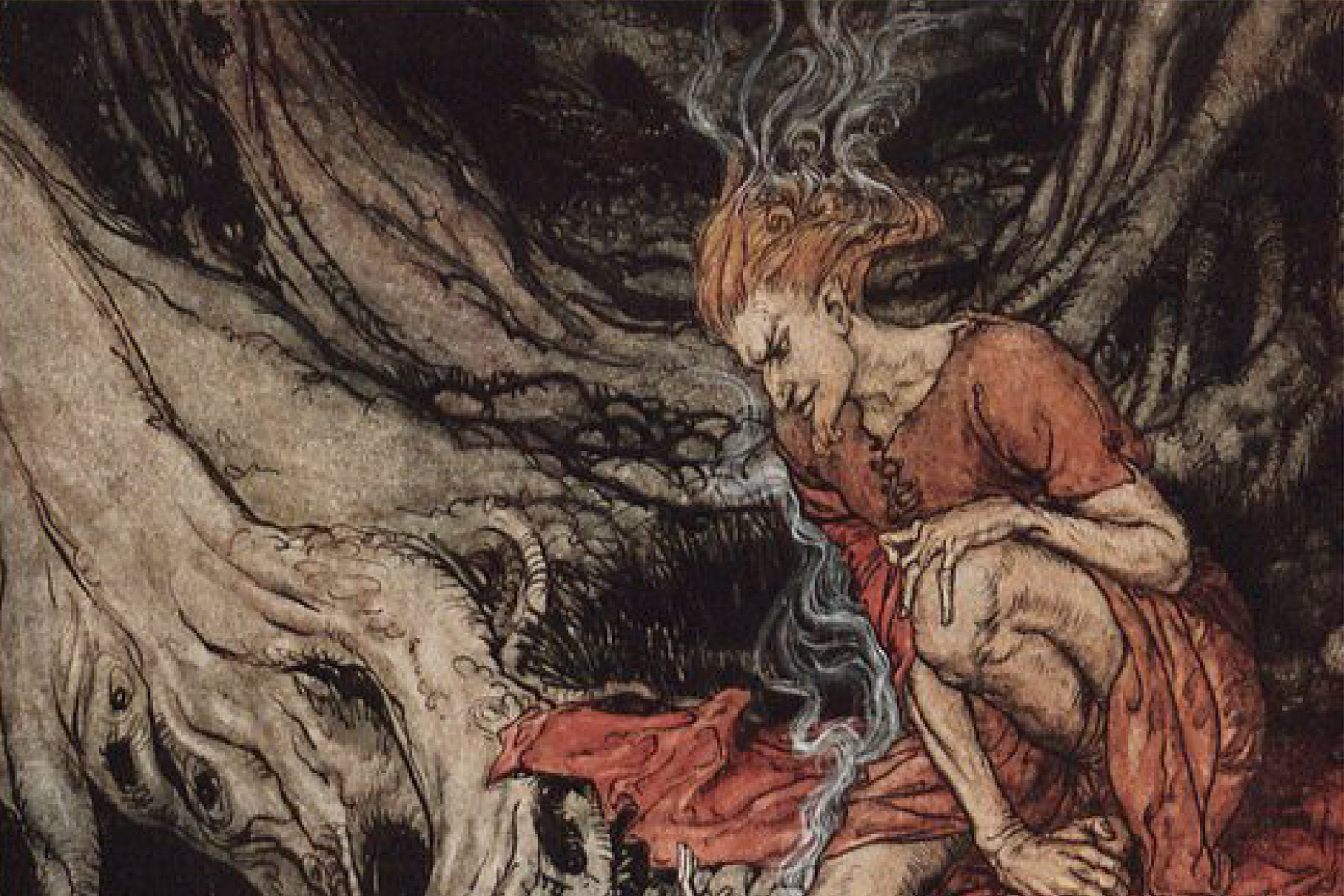
Loki: The Trickster God of Norse Mythology
Loki: The Trickster God of Norse Mythology
Loki is one of the most fascinating and complicated figures in Norse mythology. Known for his intelligence, deception, shapeshifting abilities, and unpredictable behavior, Loki often occupies a unique position among the gods. He can help the gods solve difficult problems, but he can also create the very dangers they must overcome.
Unlike many mythological characters who can easily be classified as heroes or villains, Loki does not fit neatly into either category. His stories contain humor, clever schemes, betrayal, and tragedy. His actions also play an important role in some of the most significant events in Norse mythology, including Ragnarök.
Who Was Loki?
Loki was a supernatural figure closely connected with the Norse gods, particularly Odin and Thor. Although he is commonly called a god today, the medieval Norse sources present him in a more complicated way than a simple member of the divine family.
Loki was the son of the giant Fárbauti and the goddess or giantess Laufey, depending on how the sources are interpreted. He was therefore connected to the world of the giants as well as the gods.
Loki's relationship with the gods was equally complicated. He frequently lived and traveled among them and helped them overcome serious problems. At the same time, his schemes repeatedly caused trouble.
This combination of cooperation and conflict makes Loki one of the most unusual characters in Norse mythology.
Loki as the Trickster
Loki is best known as a trickster figure. His greatest weapon is not physical strength but intelligence.
He frequently uses deception, disguises, manipulation, and clever wordplay to achieve his goals. Sometimes his tricks benefit the gods. In other stories, they put the gods in serious danger.
One important characteristic of Loki is his ability to think differently from everyone around him. When the gods face a seemingly impossible problem, Loki often finds an unexpected solution.
However, his solutions can create new problems. This makes Loki's stories unpredictable and often humorous.
Loki's Shapeshifting Powers
One of Loki's most remarkable abilities is shapeshifting.
He can change his appearance and take the form of different creatures or people. This ability allows him to enter situations where he would otherwise be recognized and gives him an advantage when carrying out his schemes.
Loki's shapeshifting is not limited to simple disguises. In the mythology, his transformations can have important consequences for the wider story.
One of the most famous examples involves Loki transforming into a mare. During this episode, he distracts the stallion Svaðilfari, which prevents a giant from completing a construction project for the gods within the agreed deadline.
Loki later gives birth to an unusual horse named Sleipnir, who becomes Odin's eight-legged horse.
This story demonstrates how unusual Loki's role can be. His shapeshifting leads directly to the creation of one of the most famous creatures in Norse mythology.
Loki and the Gods
Loki has particularly strong connections with several major Norse gods.
His relationship with Odin is complex and sometimes described through themes of companionship, obligation, and conflict. In some sources, Loki and Odin are connected by an oath of brotherhood.
His relationship with Thor is also central to many stories. The two frequently travel together, with Loki's cleverness complementing Thor's physical strength.
Thor is powerful enough to defeat many enemies, while Loki often finds unconventional ways to deal with problems. Their contrasting personalities make their adventures particularly memorable.
Loki and Thor
Loki and Thor appear together in several important myths.
One of the most famous stories involves Thor's stolen hammer, Mjölnir. The giant Þrymr steals the hammer and demands Freyja as payment for its return.
Loki helps Thor develop a plan. Thor disguises himself as Freyja and travels to the giant's hall.
The plan is dangerous and humorous, but it ultimately succeeds. Once Mjölnir is brought into the hall, Thor retrieves his hammer and defeats Þrymr.
In this story, Loki's intelligence plays a crucial role in helping Thor recover one of the most important objects in Norse mythology.
Loki and the Creation of Sleipnir
Loki's connection to Sleipnir is one of the strangest stories in Norse mythology.
The gods hire a giant builder to construct walls around Asgard. The builder claims that he can complete the work within a specific period if he receives a large reward.
His horse, Svaðilfari, is incredibly strong and helps him move enormous stones at remarkable speed. The gods realize that the builder may actually finish the project on time.
Loki is then responsible for stopping the horse.
He transforms himself into a mare and distracts Svaðilfari. The builder fails to complete the work within the agreed time.
Later, Loki returns carrying a foal. This foal becomes Sleipnir, the eight-legged horse that is eventually given to Odin.
The story illustrates both Loki's shapeshifting abilities and his unpredictable role in the world of the gods.
Loki and the Death of Baldr
One of the darkest stories involving Loki concerns Baldr, the beloved son of Odin and Frigg.
Baldr begins having dreams about his own death. His mother, Frigg, seeks protection for him by obtaining promises from many things in the world that they will not harm him.
However, mistletoe is overlooked because Frigg considers it too harmless to pose a threat.
Loki discovers this weakness.
He creates a weapon from mistletoe and gives it to Höðr, Baldr's blind brother. Höðr throws it at Baldr, causing his death.
The death of Baldr becomes a turning point in Norse mythology. The gods are devastated, and Loki's actions eventually lead to his punishment.
The story also contributes directly to the chain of events that leads toward Ragnarök.
Loki's Punishment
After Baldr's death, Loki is eventually captured by the gods.
His punishment is severe. He is bound in a cave, and a venomous serpent is positioned above him so that poison drips onto his face.
Loki's wife, Sigyn, remains beside him and holds a container to catch the venom. When she must empty it, some of the poison reaches Loki.
According to the myth, Loki's violent reactions to the poison are connected with earthquakes.
His imprisonment continues until Ragnarök.
Loki's Children
Loki has several children who become extremely important in Norse mythology.
Among the most famous are:
- Fenrir, the enormous wolf.
- Jörmungandr, the Midgard Serpent.
- Hel, ruler of the realm associated with the dead.
- Sleipnir, Odin's eight-legged horse.
These children have very different roles, but several become major opponents of the gods during Ragnarök.
This is one of the reasons Loki's family is so important to the larger structure of Norse mythology.
Fenrir and Loki
Fenrir is a gigantic wolf who becomes feared by the gods because of his enormous strength and his predicted role in the future destruction of the world.
The gods attempt to restrain him with increasingly powerful chains. Eventually, they use a magical binding called Gleipnir, which appears delicate but is incredibly strong.
Fenrir's story is closely connected with Ragnarök. According to the mythology, he eventually breaks free and kills Odin during the final conflict.
Loki's connection to Fenrir makes the story even more significant because the trickster god's family ultimately becomes one of the greatest threats facing the gods.
Jörmungandr, the Midgard Serpent
Another child of Loki is Jörmungandr, a massive serpent thrown into the sea by Odin.
The serpent grows until it becomes so enormous that it surrounds the world and holds its own tail in its mouth.
Jörmungandr and Thor become legendary enemies.
Their final confrontation takes place during Ragnarök. Thor kills the serpent with Mjölnir but dies shortly afterward from its venom.
This story connects two major figures of Norse mythology: Thor, the defender of the gods, and Loki's monstrous child.
Hel, Ruler of the Dead
Loki's daughter Hel is another important figure in Norse mythology.
She is given authority over a realm associated with the dead. Her appearance is described in a striking way, with one side of her body appearing living and the other associated with death.
Hel's realm becomes particularly important after Baldr's death. The gods attempt to recover Baldr from the world of the dead, but their effort ultimately fails.
Loki and Ragnarök
Loki's role in Ragnarök is one of the most important aspects of his mythology.
After remaining imprisoned for a long period, Loki eventually breaks free during the final destruction of the existing order.
He joins the forces opposing the gods and fights against them during the final battle.
According to the surviving myths, Loki and Heimdall, the guardian of the gods, fight each other and both die.
Loki's participation in Ragnarök represents the culmination of his long and complicated relationship with the gods.
Is Loki Evil?
Calling Loki simply "evil" does not fully describe the character found in Norse mythology.
Loki performs both helpful and destructive actions. He can rescue the gods from difficult situations and later cause enormous harm.
His character is better understood through contradiction.
He represents cleverness, unpredictability, transformation, and the disruption of established order. His stories often show that intelligence can be both useful and dangerous.
This complexity is one reason Loki has remained such a popular figure in mythology.
Loki's Symbols and Characteristics
Several characteristics are strongly associated with Loki:
Trickery: Loki frequently uses deception to accomplish his goals.
Shapeshifting: His ability to change form is central to many of his stories.
Intelligence: Loki often solves problems through clever plans rather than physical strength.
Chaos: His actions can disrupt the plans of gods and giants alike.
Fire: Modern culture frequently associates Loki with fire, although the connection between Loki and fire is more complicated in the original Norse sources than many modern portrayals suggest.
Transformation: Loki's stories repeatedly involve changes in identity, form, and circumstances.
Loki in Modern Popular Culture
Loki has become one of the most recognizable characters from Norse mythology in modern entertainment.
He appears in comics, films, television series, video games, novels, and other forms of popular culture. Marvel's version of Loki is particularly famous and has introduced the character to audiences who may not have previously encountered Norse mythology.
However, the modern fictional character differs significantly from the Loki found in medieval Norse sources.
The mythological Loki is much more unpredictable and difficult to classify. His stories involve giants, gods, magical transformations, monsters, death, and Ragnarök.
Modern adaptations often reinterpret these elements to create a character suited to contemporary storytelling.
Why Loki Remains Fascinating
Loki remains fascinating because he challenges simple ideas about heroes and villains.
He is intelligent but unreliable. He can be helpful but dangerous. He lives among the gods but has strong connections to the giants. He creates problems but sometimes possesses the only solution.
His stories also explore important themes such as deception, consequences, identity, fate, and the limits of divine power.
Rather than representing one simple idea, Loki embodies contradiction and change.
Yorumlar