 (1).webp)
The Story of Hades and the Underworld
The Story of Hades and the Underworld
Hades and the Underworld are among the most fascinating subjects in Greek mythology. Unlike the modern idea of hell, the Greek Underworld was generally understood as the realm of the dead, where souls went after death. Hades was both the name of its ruler and, in ancient usage, the name associated with his realm.
The myths surrounding Hades explore death, the afterlife, divine power, and the boundary between the world of the living and the world of the dead.
Who Was Hades?
Hades was one of the three sons of Cronus and Rhea. His brothers were Zeus and Poseidon, while his sisters included Hera, Demeter, and Hestia.
According to Greek mythology, Cronus swallowed his children because he feared that one of them would overthrow him. Zeus eventually escaped this fate and helped his siblings defeat the Titans.
After their victory, the three brothers divided the realms of the cosmos. Zeus received the sky, Poseidon became ruler of the sea, and Hades received dominion over the Underworld.
Although Hades was one of the most powerful gods, he was not traditionally one of the Olympian gods because his domain was beneath the Earth rather than Mount Olympus.
What Was the Greek Underworld?
The Underworld was the realm where the souls of the dead went after leaving the world of the living. It was not simply a place of punishment. Greek ideas about the afterlife were complex and changed across different periods and traditions.
The Underworld contained different regions, each associated with different experiences after death.
Some souls were believed to enter the broader realm of the dead, while exceptional individuals could be associated with more pleasant destinations such as the Elysian Fields. Tartarus, meanwhile, was a place of severe punishment for certain especially notorious figures.
The River Styx
One of the most famous features of the Underworld was the River Styx. In mythology, the Styx represented a boundary between the world of the living and the realm of the dead.
The river was also associated with divine oaths. Gods who swore an oath by the Styx were believed to face serious consequences if they broke it.
Other rivers were also associated with the Underworld, including the Acheron and Lethe. Each had different associations within Greek traditions.
Charon and the Journey of the Dead
According to Greek mythology, the souls of the dead needed to cross a river on their journey into the Underworld. Charon, the mysterious ferryman, transported souls across the waters.
Later traditions commonly associated payment with this journey. This is one reason ancient Greek burial customs sometimes involved placing a coin with the deceased.
The image of Charon transporting the dead became one of the most recognizable elements of Greek Underworld mythology.
Cerberus: The Guardian of the Underworld
Cerberus was a monstrous dog that guarded the entrance to the Underworld. He is commonly described as having three heads, although ancient artistic and literary traditions sometimes portrayed him differently.
His main role was to prevent the dead from escaping and to stop the living from entering without permission.
Cerberus became particularly famous through the story of Hercules, who was required to capture the creature as one of his Twelve Labors.
Hades and Persephone
One of the best-known stories connected to Hades concerns Persephone, the daughter of Demeter.
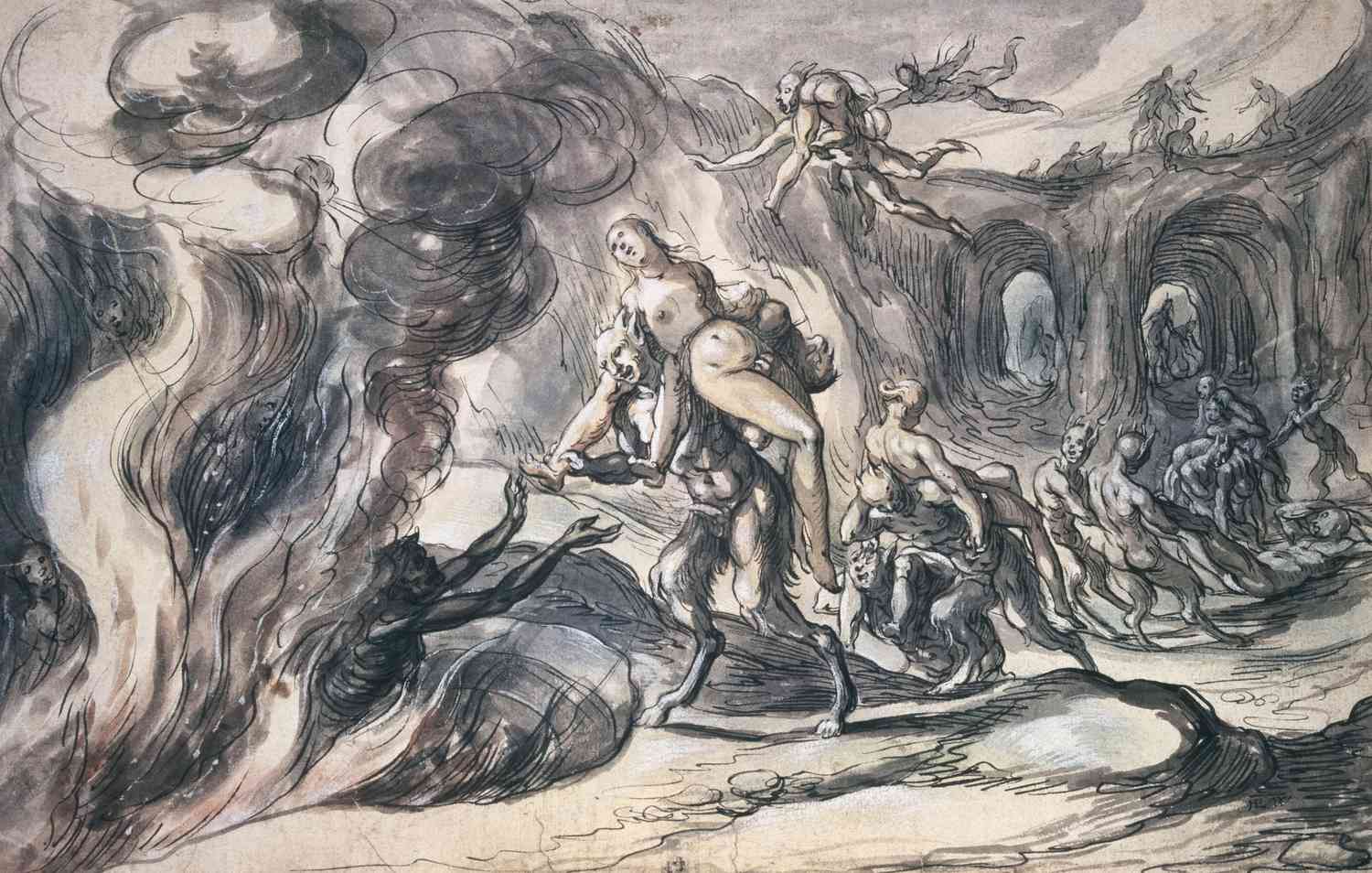
According to the most famous version of the myth, Hades took Persephone to the Underworld. Demeter, goddess of agriculture and her mother, was devastated by her daughter's disappearance. Her grief caused the Earth to become barren.
Eventually, an arrangement was made allowing Persephone to spend part of the year with Demeter and part of the year in the Underworld.
The story became closely associated with the changing seasons. Persephone's return represented growth and fertility, while her absence was connected with the barren period of the year.
Hades Was Not the Greek Devil
A common modern misunderstanding is to compare Hades directly with the concept of the devil or Satan. In ancient Greek mythology, Hades was not an embodiment of evil.
He was the ruler of the dead and carried out his role within the cosmic order established after the defeat of the Titans. His domain was necessary because death was considered an unavoidable part of existence.
Although Hades could be frightening and was not usually portrayed as a friendly god, he was fundamentally a ruler of the Underworld rather than a personification of evil.
Tartarus and the Punishment of the Dead
The Greek Underworld also included Tartarus, a deep and gloomy region associated with imprisonment and punishment.
Some mythological figures were condemned to extraordinary punishments there. Famous examples include Sisyphus, who was forced to push a huge stone uphill repeatedly, and Tantalus, who experienced an eternal form of deprivation.
These stories often explored themes of arrogance, betrayal, greed, and punishment.
The Meaning of the Underworld in Greek Mythology
The Underworld represented more than a destination after death. It reflected ancient Greek ideas about mortality, justice, fate, and the limits of human power.
The myths allowed people to explore difficult questions:
- What happens after death?
- Can humans escape their destiny?
- What makes an action deserving of punishment?
- Can the living communicate with the dead?
- Is death the end of existence?
Through these stories, Greek mythology created a rich and complex picture of the afterlife.
Hades in Ancient Greek Culture
Although Hades was not worshipped in exactly the same way as Zeus or Athena, he was an important part of the Greek religious worldview. Ancient Greeks recognized the power of death and the Underworld through burial customs, rituals, and beliefs concerning the dead.
The mythology surrounding Hades also influenced Greek literature and art, where the Underworld became a recurring setting for stories involving heroes and divine figures.
Yorumlar