 (1).webp)
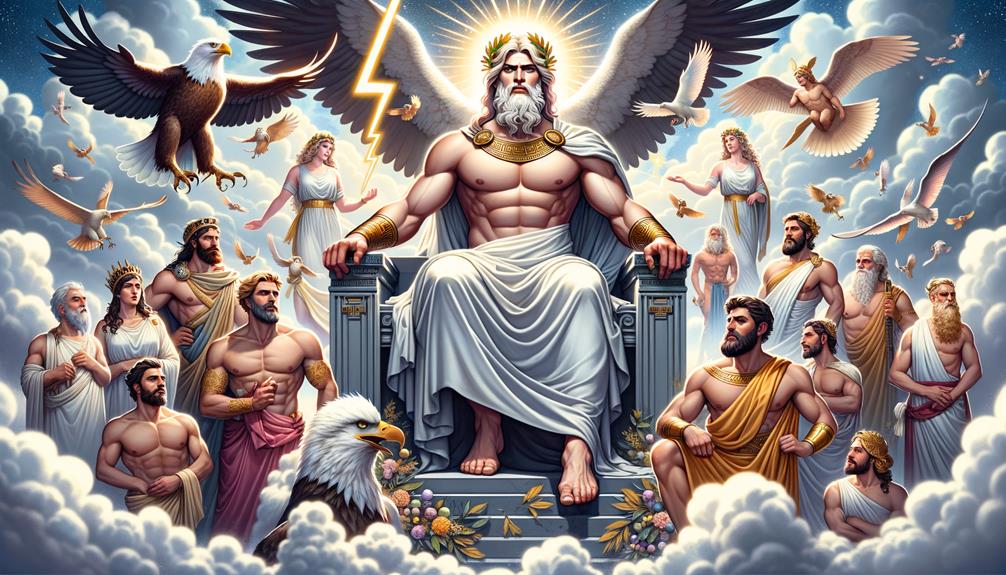
Zeus: King of the Gods and His Powers
Zeus: King of the Gods and His Powers
Zeus is one of the most famous figures in Greek mythology and is traditionally described as the king of the gods and ruler of Mount Olympus. Known for his connection with the sky, thunder, lightning, justice, and authority, Zeus played a central role in many ancient Greek myths.
His stories portray him as a powerful but complex deity who could protect gods and humans while also showing anger, jealousy, and ambition. His influence extended far beyond the other Olympian gods, making him one of the most important figures in ancient Greek religion and mythology.
Who Was Zeus?
Zeus was the son of the Titans Cronus and Rhea. According to Greek mythology, Cronus feared that one of his children would eventually overthrow him, so he swallowed his children after they were born.
Rhea managed to protect Zeus by hiding him and giving Cronus a stone wrapped in cloth instead. Zeus was eventually raised in secret and grew powerful enough to challenge his father.
After defeating Cronus and the Titans in the Titanomachy, Zeus and his brothers divided control of the cosmos. Zeus became ruler of the sky, Poseidon received dominion over the sea, and Hades became associated with the underworld.
Zeus as King of the Gods
As ruler of Mount Olympus, Zeus was regarded as the highest-ranking Olympian deity. He represented authority, order, justice, and the maintenance of cosmic balance.
His position gave him influence over both gods and mortals. Other deities could disagree with him, challenge his decisions, or attempt to influence him, but Zeus generally remained the ultimate authority among the Olympians.
His role as king was not simply about physical strength. Zeus was also associated with law, hospitality, oaths, and the social order of ancient Greek society.
The Powers of Zeus
Zeus was associated with several important powers that reflected his position as ruler of the gods.
Control Over Thunder and Lightning
One of the most recognizable characteristics of Zeus is his association with thunder and lightning. In Greek mythology, the thunderbolt was one of his primary symbols and weapons.
The thunderbolt represented his enormous authority and destructive power. Storms and lightning were therefore connected with the presence and power of Zeus.
Power Over the Sky
Zeus was closely associated with the heavens and the weather. He could influence storms, rain, winds, and other atmospheric phenomena in mythological traditions.
This connection was particularly important to agricultural societies, where weather could determine whether crops flourished or failed.
Authority and Justice
Zeus was also associated with justice, law, and social order. He was believed to protect oaths and hospitality and to punish those who violated important moral or social rules.
This aspect of his character demonstrates that Zeus was more than a storm deity. He represented the authority necessary to maintain order among both gods and humans.
Zeus and the Olympian Gods
Zeus was part of a large divine family that included many of the most famous figures in Greek mythology.
His brothers included Poseidon and Hades, while his sisters included Hera, Demeter, and Hestia. Zeus also had numerous children with goddesses and mortal women.
Some of his best-known divine children include Athena, Apollo, Artemis, Hermes, Ares, and Dionysus, although different ancient traditions provide different accounts of his relationships and offspring.
This extensive family network connects Zeus to many of the major stories of Greek mythology.
Zeus and Hera
Hera was both the sister and wife of Zeus and was regarded as the queen of the gods. Their relationship is one of the most complicated in Greek mythology.
Zeus is frequently portrayed as unfaithful, leading to conflicts with Hera. These stories often involve jealousy, revenge, and disputes between the divine couple.
Their relationship reflects the dramatic and sometimes contradictory nature of Greek myths, where gods possess extraordinary powers but also display human emotions and weaknesses.
Symbols Associated With Zeus
Several symbols are strongly connected with Zeus.
The most famous include:
- Thunderbolt
- Eagle
- Oak tree
- Scepter
- Aegis
The eagle represented strength and authority, while the oak was associated with Zeus in ancient religious traditions. The thunderbolt, however, remains the most recognizable symbol of his power.
Famous Myths Involving Zeus
Zeus appears in numerous Greek myths. His stories include conflicts with Titans, disputes among gods, interactions with heroes, and relationships with mortals.
One important part of his mythology is the Titanomachy, the great conflict between the Olympian gods and the Titans. Zeus led the younger generation of gods against the Titans and ultimately helped establish the Olympian order.
Zeus also appears in stories involving Prometheus, Hercules, Perseus, and many other legendary figures.
Zeus and Ancient Greek Worship
Zeus was not only a mythological character but also an important deity in ancient Greek religious practice. Temples and sanctuaries were dedicated to him, and festivals were held in his honor.
One of the most famous religious sites associated with Zeus was Olympia. The ancient Olympic Games were held there in connection with religious traditions honoring Zeus.
The enormous statue of Zeus at Olympia was also considered one of the Seven Wonders of the Ancient World.
Zeus in Modern Culture
Zeus continues to appear in modern books, films, television shows, video games, and other forms of entertainment. His recognizable appearance and powerful mythology have made him one of the most frequently adapted Greek gods.
Modern interpretations sometimes portray Zeus differently from ancient sources, giving him new personalities or abilities. However, his traditional image as the powerful ruler of the Olympian gods remains widely recognized.
Yorumlar